
Cart
0
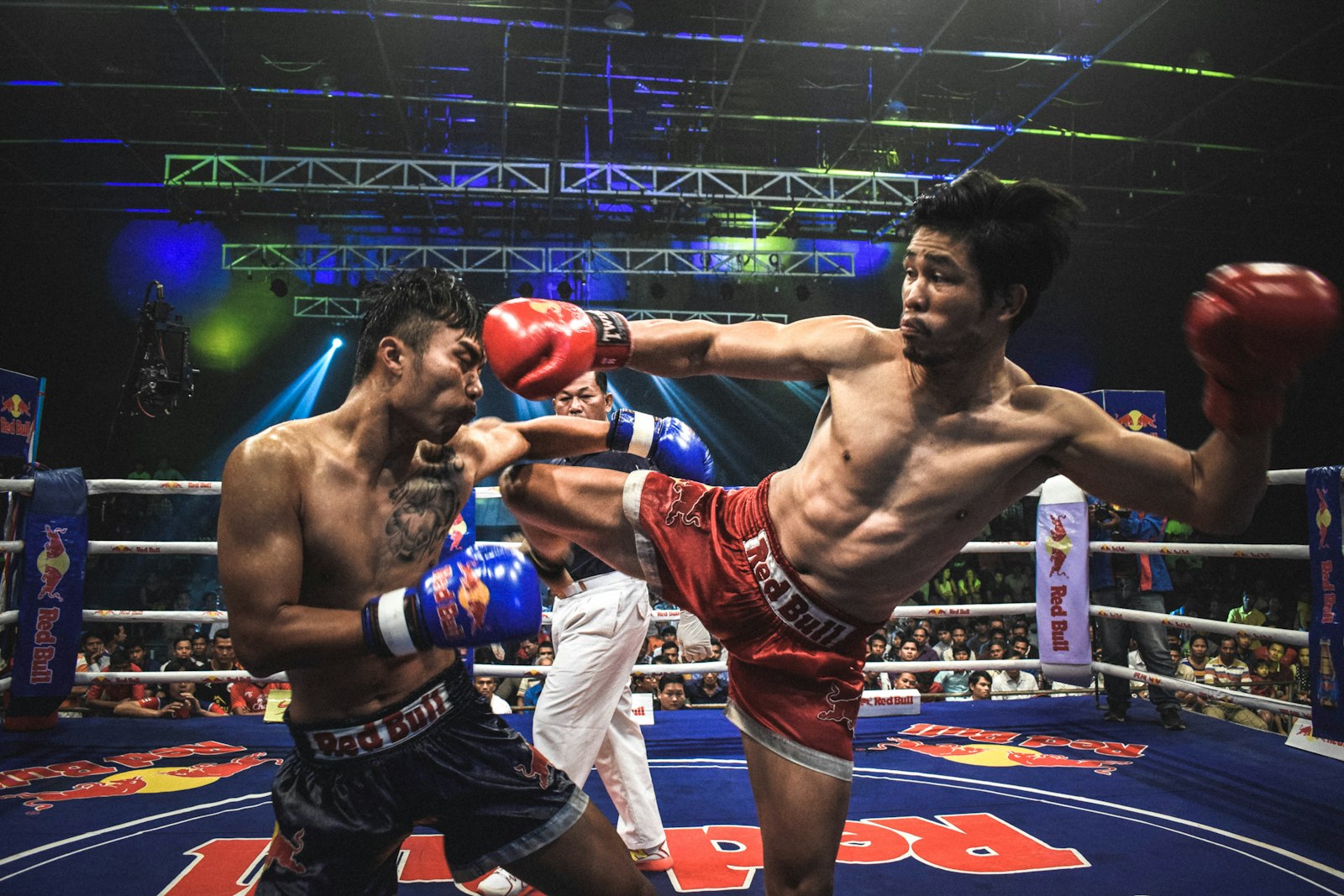
The roundhouse kick is the technique most people picture when they think of Muay Thai, and it's also the one most beginners throw wrong for months without knowing it — pushing with the leg instead of rotating with the hip, which caps power at a fraction of what the technique can actually generate. This breaks the kick down into its real mechanical phases, covers the mistakes that quietly kill power and speed, and gives you drills that actually fix them rather than just more reps of the same habit.

The Three Phases of a Proper Roundhouse Kick
Chamber and pivot. The kick starts on the ground, not in the air. Your standing foot pivots on the ball of the foot until your heel points roughly toward the target, and your kicking-side knee lifts as this happens — the pivot is what allows the hip to rotate freely instead of fighting against a planted foot.
Hip rotation and extension. As the pivot completes, the hip snaps through and the leg extends outward in a whipping motion, not a straight-line push. Power comes from this rotational snap, not from muscling the leg forward, which is the single biggest thing separating a kick that lands with authority from one that just taps the target.
Follow-through and recovery. A kick aimed to land should continue its arc through the target rather than stopping at first contact, then recover back to guard quickly. Stopping the leg dead at impact bleeds power and leaves you off-balance a fraction of a second longer than you need to be.
Step-by-Step: How to Throw a Correct Roundhouse Kick
- Start in your fighting stance with weight balanced evenly between both feet.
- Lift your kicking-side knee and begin rotating your hip in the direction of the kick.
- Pivot fully on the ball of your standing foot — your heel should end up pointing roughly at the target, not still facing forward.
- Drive the hip through and extend the leg as it reaches the target, letting the motion whip rather than push.
- Strike with your shin, roughly two to four inches above the ankle bone, not with your foot or instep.
- Let the leg follow through the target instead of stopping dead on contact.
- Recover the kicking leg back to your stance quickly and reset your guard.

Common Mistakes That Kill Your Power
Not pivoting the standing foot. Kicking "square," with your standing foot still facing forward, physically blocks your hip from rotating fully. This is the single most common power leak in beginners and it's purely a foot-position fix, not a strength issue.
Leaning away from the kick. Pulling your upper body backward as you kick feels safer but shortens your reach, reduces power transfer, and leaves you off-balance and open to a counter. Lean slightly forward into the kick instead.
Striking with the foot on a hard target. The shin is built to take and deliver impact; the small bones of the foot are not. Kicking with the instep against a shin, elbow, or the point of a hip is a common way beginners injure their own foot.
Telegraphing the kick. Dropping your hands, staring at the target, or winding up before you kick gives your opponent time to check or counter it. The chamber and pivot should happen in one continuous motion, not as a visible wind-up.
Skipping the chamber. Throwing the kick as a straight push from the hip without first lifting the knee produces a slapping motion instead of the whip that generates real power.
Where to Aim: High, Mid, and Low Kicks
| Target | Effect | Notes |
|---|---|---|
| Low (outer thigh) | Disrupts base and mobility, cumulative damage over rounds | Lowest risk to throw, foundational in most combinations |
| Mid (ribs / body) | Winds and slows an opponent, harder to check cleanly than a low kick | Moderate risk — exposed if telegraphed or thrown without setup |
| High (head) | Highest finishing potential of the three | Highest risk: easiest to duck or catch, needs real setup and flexibility |
How to Generate More Power Without Swinging Harder
Power in a roundhouse kick comes from three things stacking together: a full pivot that frees the hip to rotate, the hip rotation itself driving the leg like a whip rather than a lever, and weight transfer moving your body mass through the target instead of staying planted. Trying to add power by swinging the leg harder without fixing pivot and hip rotation just adds strain on the knee and hip joints for very little extra impact. Fighters with genuinely heavy kicks are rarely the strongest athletes in the gym — they're the ones who've drilled the rotation until it's automatic.

Drills to Build a Better Roundhouse Kick
Slow-motion pivot drill. No bag, no power — just throw the kick at quarter speed, pausing to check that your standing foot has pivoted fully before the leg extends. This grooves the movement pattern without letting bad habits hide behind speed.
Technique-focus bag rounds. Spend entire rounds on the heavy bag throwing kicks for correct mechanics only, deliberately at 60% power, rather than trying to hit hard every time. Power without technique just reinforces the wrong pattern harder.
Kick off the jab. Throw a jab immediately followed by a roundhouse kick on the same or opposite side. This builds the habit of setting kicks up behind hand strikes instead of throwing them as a standalone, telegraphed attack.
Single-leg balance holds. After throwing a kick, hold the finishing position on one leg for a second or two before resetting. If you can't hold it, your weight transfer and balance through the kick need work before power will show up consistently.
Drilling this hard on the bag or in sparring? Make sure your shins are actually protected while you build the habit — see our Muay Thai shin guard buying guide for coverage types and sizing.

Frequently Asked Questions
Which leg should I kick with first as a beginner?
Most coaches start beginners on the rear-leg roundhouse kick, since it travels the furthest distance and forces you to learn the full pivot-and-hip-rotation sequence properly. The lead-leg kick is faster to add once the rear-leg mechanics are solid.
Why does my roundhouse kick lack power?
The most common causes are not pivoting the standing foot fully, leaning away from the kick instead of into it, and skipping the knee chamber so the kick becomes a push instead of a whipping hip rotation.
Should I kick with my shin or my foot?
For power kicks against a hard target, strike with the shin, roughly two to four inches above the ankle. The foot and instep are more prone to injury against a hard surface and are generally reserved for lighter, faster kicks at range.
How long does it take to develop a good roundhouse kick?
Basic mechanics can click within a few weeks of focused drilling, but real power, speed, and the ability to disguise the kick in live sparring typically develop over months to years of consistent training.
How do I stop my kicks from being checked or blocked?
Set kicks up behind hand combinations rather than throwing them as standalone attacks, vary your targets so an opponent can't anticipate high, mid, or low, and avoid telegraphing with your hands or eyes before you kick.
Keep Reading
Best Muay Thai Shin Guards: Coverage, Padding & Sizing Guide →
Best Muay Thai Gloves: The Complete Buying Guide →
Best Muay Thai Gyms in Bangkok: A Fighter's Guide →


