
Cart
0
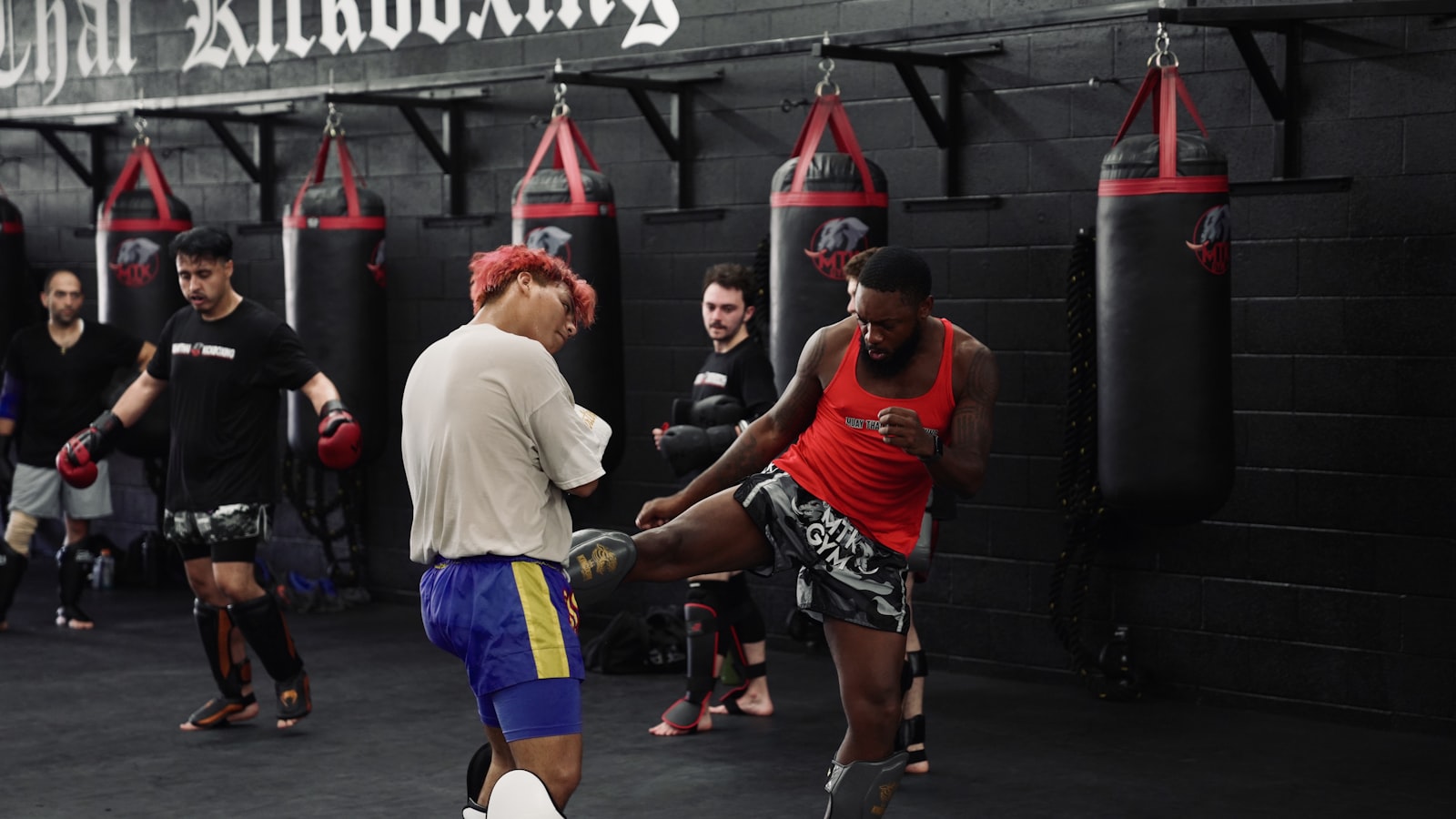
Buy the wrong Muay Thai gloves and you'll find out during your third week of training — not before. The wrong weight strains your wrists on the bag, the wrong material falls apart in a humidity climate it was never built for, and the wrong fit turns every punch into a fight with your own equipment. This guide works through what actually matters: weight by bodyweight and use case, the real difference between leather and synthetic, how to size a glove correctly, and which gloves in our own range earn their category. Everything here reflects gear we've sourced and fought in ourselves, most of it shipped directly from manufacturers in Thailand rather than through a reseller layer.

Quick Answer: Best Muay Thai Gloves at a Glance
If you already know your use case, start here. Each pick is explained in full further down the page.
| Category | Glove | Price | Oz range |
|---|---|---|---|
| Best Overall | Fairtex Universal "Tight-Fit" Gloves | from £122.99 | 8–16 oz |
| Best for Beginners | Fairtex Microfiber Gloves | from £119.99 | 8–16 oz |
| Best Value (Leather) | Fairtex Universal "Tight-Fit" – Dark Cloud | from £119.99 | 8–16 oz |
| Best Premium / Competition | Fairtex X Glory Lace-Up Gloves | from £164.99 | 8–16 oz |
| Best Compact Fit | Boon Compact Velcro Gloves | from £125.99 | 8–16 oz |
| Best for Heavy Bag Work | Boon Bag Gloves | from £111.00 | S–XL |
How Muay Thai Gloves Differ From Boxing Gloves
They look similar enough that most non-fighters can't tell them apart in a photo, but the two are built for different jobs. A Muay Thai glove has a shorter cuff than a boxing glove, which sits lower on the wrist and gives you the mobility to check kicks, clinch, and turn your wrist through elbow strikes without the glove restricting the joint. Padding is distributed more evenly across the knuckles and forearm-facing side of the glove, because in Muay Thai you're blocking shins and knees with your gloves as often as you're throwing punches with them — a pure boxing glove concentrates padding for punching and leaves the outer hand under-protected for that job. The thumb is also usually stitched closer to the index finger on a Muay Thai glove, which matters when you're fighting for an elbow angle in the clinch.
None of this makes a boxing glove unsafe for Muay Thai training, and plenty of fighters use one for bag work. But if you're sparring, clinching, or checking kicks regularly, a purpose-built Muay Thai glove will do the job better.

How to Choose the Right Glove Weight for Your Bodyweight
Glove weight (measured in ounces) is really about how much padding sits between your hand and whatever you're hitting. Heavier gloves protect your hands and your sparring partner better, at the cost of hand speed; lighter gloves are faster but transmit more force back into your knuckles and wrists. Bodyweight is the starting point, but use case shifts the recommendation — go up in weight for sparring, down for technical pad work.
| Bodyweight | Recommended oz | Primary use |
|---|---|---|
| Under 130 lb / 59 kg | 10 oz | Light bag work, technique training |
| 130–155 lb / 59–70 kg | 12 oz | Pad work, technical sparring |
| 155–175 lb / 70–79 kg | 14 oz | Bag work, general sparring |
| 175–200 lb / 79–91 kg | 16 oz | Sparring, all-round training |
| 200 lb+ / 91 kg+ | 16–18 oz | Heavy sparring, bag work |
One practical note: most fighters end up owning two pairs once they're training seriously — a lighter pair (10–12 oz) for pads and technical drilling, and a heavier pair (14–16 oz) reserved for sparring. If you can only buy one pair right now, size up rather than down; a slightly heavy glove is a minor inconvenience on the bag, but an under-padded glove in live sparring is how hands and noses get hurt.
Materials Explained: Leather vs Microfiber vs Synthetic
The material determines how the glove ages, not just how it feels on day one. This is the part most buyers skip and regret within a year.
| Material | Durability | Break-in | Best for | |
|---|---|---|---|---|
| Genuine leather | 3–5+ years, daily use | 2–4 weeks | Regular training, long-term value | |
| Microfiber | 1–2 years | ~1 week | Balance of cost and durability | |
| Synthetic (PU) | 6–12 months | q | Beginners, travel, humid climates |
Genuine leather — the kind used on gloves like the Fairtex BGV1 line — is the material almost every serious gym in Thailand trains in, and for a reason: it's the only material that actually improves with use, molding to your hand shape over the first few weeks and holding that shape for years if you look after it. Microfiber closes most of that durability gap at a lower price and needs almost no break-in, which is why it's a sensible default for anyone training three or more sessions a week without wanting to commit to leather pricing immediately. Straight synthetic/PU is the right call for one situation specifically: you're not sure training is going to stick, or you're buying a travel pair that's going to sit in a humid gym bag more than it sits on a shelf.
Glove Anatomy: What Actually Affects Performance

Four things separate a glove that performs from one that just looks the part:
Padding distribution. Look for foam that's layered rather than a single dense block — layered foam absorbs impact progressively instead of transmitting a hard shock straight back into your hand, which matters over hundreds of pad rounds.
Wrist strap. A wide Velcro strap that wraps fully around the wrist locks the joint in place far better than a narrow strap or an elastic-only cuff; this is the single biggest factor in wrist injury prevention on the bag.
Thumb attachment. A thumb that's stitched to the body of the glove (rather than free-moving) protects against thumb injuries when you're blocking or clinching, at a small cost to grip flexibility.
Palm ventilation and lining. Mesh palm panels matter more than most buyers expect — a glove that doesn't breathe stays wet between sessions, which is both unpleasant and the fastest way to break down interior padding and stitching.
Sizing Guide: How to Measure Your Hand
Oz weight and hand fit are two separate decisions. Oz weight (above) is chosen by bodyweight and use case; fit is chosen by your actual hand size, and getting it wrong means a glove that's technically the right weight but still feels wrong every time you make a fist.
Wrap a tape measure around your dominant hand at the widest point (across the knuckles, not including the thumb) to get your hand circumference, then check it against typical sizing:
| Hand circumference | Typical glove size |
|---|---|
| Under 7.5 in / 19 cm | S |
| 7.5–8.5 in / 19–21.5 cm | M |
| 8.5–9.5 in / 21.5–24 cm | L |
| 9.5 in+ / 24 cm+ | XL |
A properly fitted glove lets you close a full fist without the padding bunching hard at the knuckles, leaves roughly a thumb's width of space at the wrist opening before the strap closes, and immobilises the wrist without cutting off circulation. If you're between sizes, size up if you wrap your hands before gloving (the wraps take up the extra room); size down if you train bare-knuckle-into-glove.

The Best Muay Thai Gloves, By Category
Best Overall

Editor's Pick
Fairtex Universal "Tight-Fit" Gloves
The BGV1 shape is the closest thing this sport has to a default recommendation, and it earns that reputation. The ergonomically contoured hand compartment gives a genuinely tight fit rather than the loose sack-of-padding feel of budget gloves, which means less hand movement inside the glove on every strike. It's the pair we point beginners and ten-year veterans toward equally.
Shop the Fairtex Universal Gloves →Best for Beginners

Editor's Pick
Fairtex Microfiber Gloves
Same long-cuff Fairtex shape as their leather line, at a lower price and with almost no break-in period — you can hit pads properly in these the day they arrive rather than waiting out a few weeks of leather softening first. The right call if you're not yet sure training is going to become a habit, or you just don't want to baby a new leather pair for a month.
Shop the Fairtex Microfiber Gloves →Best Value (Leather)

Editor's Pick
Fairtex Universal "Tight-Fit" – Dark Cloud
The same BGV1 construction as our Best Overall pick, at genuine-leather pricing that undercuts most microfiber gloves from other brands. If your budget stretches to leather at all, this is the pair that makes the case for skipping synthetic entirely.
Shop the Dark Cloud Gloves →Best Premium / Competition

Editor's Pick
Fairtex X Glory Lace-Up Gloves
Built to the same spec used in GLORY Kickboxing competition, the lace-up closure gives a locked-in wrist fit that Velcro can't fully match — you'll want a cornerman to tie these, which is exactly the trade-off competition fighters accept for the fit. Reach for this pair once you're training for or competing in actual bouts, not for everyday pad rounds.
Shop the Fairtex X Glory Gloves →Best Compact Fit

Editor's Pick
Boon Compact Velcro Gloves
Boon's compact shape sits noticeably closer to the hand than the standard BGV1 profile, which smaller-handed fighters consistently prefer for the reduced bulk around the knuckles and better feel through the clinch. Worth trying before you assume every "one size" glove fits your hand the same way.
Shop the Boon Compact Gloves →Best for Heavy Bag Work

Editor's Pick
Boon Bag Gloves
A dedicated bag glove built long and lean rather than bulky, handmade in Thailand from top-grain leather that's meant to take repeated hard bag contact without breaking down the way a sparring glove would under the same abuse. Not the pair to spar in — padding is shaped for impact absorption on a fixed target, not for protecting a training partner.
Shop the Boon Bag Gloves →How to Break In New Gloves Properly
New leather gloves feel stiff and slightly too firm across the knuckles for the first several sessions — that's normal, not a sizing mistake. Speed the process safely by flexing the gloves by hand (repeatedly making a fist and releasing) for a few minutes before your first few sessions, and doing your first two or three rounds on pads rather than the heavy bag, which is gentler on stiff padding. Avoid the trick of soaking leather gloves in water to "speed up" break-in — it softens the leather unevenly and shortens the glove's lifespan rather than extending it. Microfiber and synthetic gloves need little to none of this and are usually ready to go out of the box.

Caring for Your Gloves So They Actually Last
Let gloves air out fully between sessions rather than zipping them straight into a closed bag — trapped moisture is the single biggest cause of early breakdown, both in the padding and in the stitching. A glove deodoriser or simply loosening the wrist strap and standing the gloves upright to dry does most of the work. Wipe leather down periodically with a barely damp cloth and a leather conditioner formulated for sports equipment; avoid direct sun or radiators for drying, which cracks leather fast. Never machine-wash gloves of any material — the padding doesn't survive it.
With regular training (3–5 sessions a week), expect to replace synthetic gloves every 6–12 months and genuine leather every 2–4 years, depending on how well you look after them between sessions.
Frequently Asked Questions
What size Muay Thai gloves should I buy?
Glove size depends on bodyweight and use case: 10oz for training under 130lbs, 12oz for training between 130–155lbs, 14–16oz for sparring and bag work at most weights, and 16–18oz for heavy sparring or larger fighters.
Are Muay Thai gloves different from boxing gloves?
Yes. Muay Thai gloves have a shorter cuff for wrist mobility in the clinch, a thumb design suited to elbow strikes, and more even padding for blocking kicks as well as punching.
Should beginners buy leather or synthetic gloves?
Beginners can start with quality synthetic or microfiber gloves, which are cheaper and need no break-in, then move to genuine leather once training frequency increases.
How do I know if Muay Thai gloves fit correctly?
A properly fitted glove lets you close a full fist without padding bunching at the knuckles, leaves roughly a thumb's width of space at the wrist before the strap, and secures the wrist without cutting circulation.
How often should I replace my Muay Thai gloves?
With 3–5 sessions a week, synthetic gloves typically need replacing every 6–12 months and genuine leather every 2–4 years, depending on padding compression and seam wear.
Keep Reading
Shop the full Muay Thai gloves range →
Best Muay Thai Shin Guards: Coverage, Padding & Sizing Guide →
A Comprehensive Guide to Training Muay Thai in Thailand →


