
Cart
0
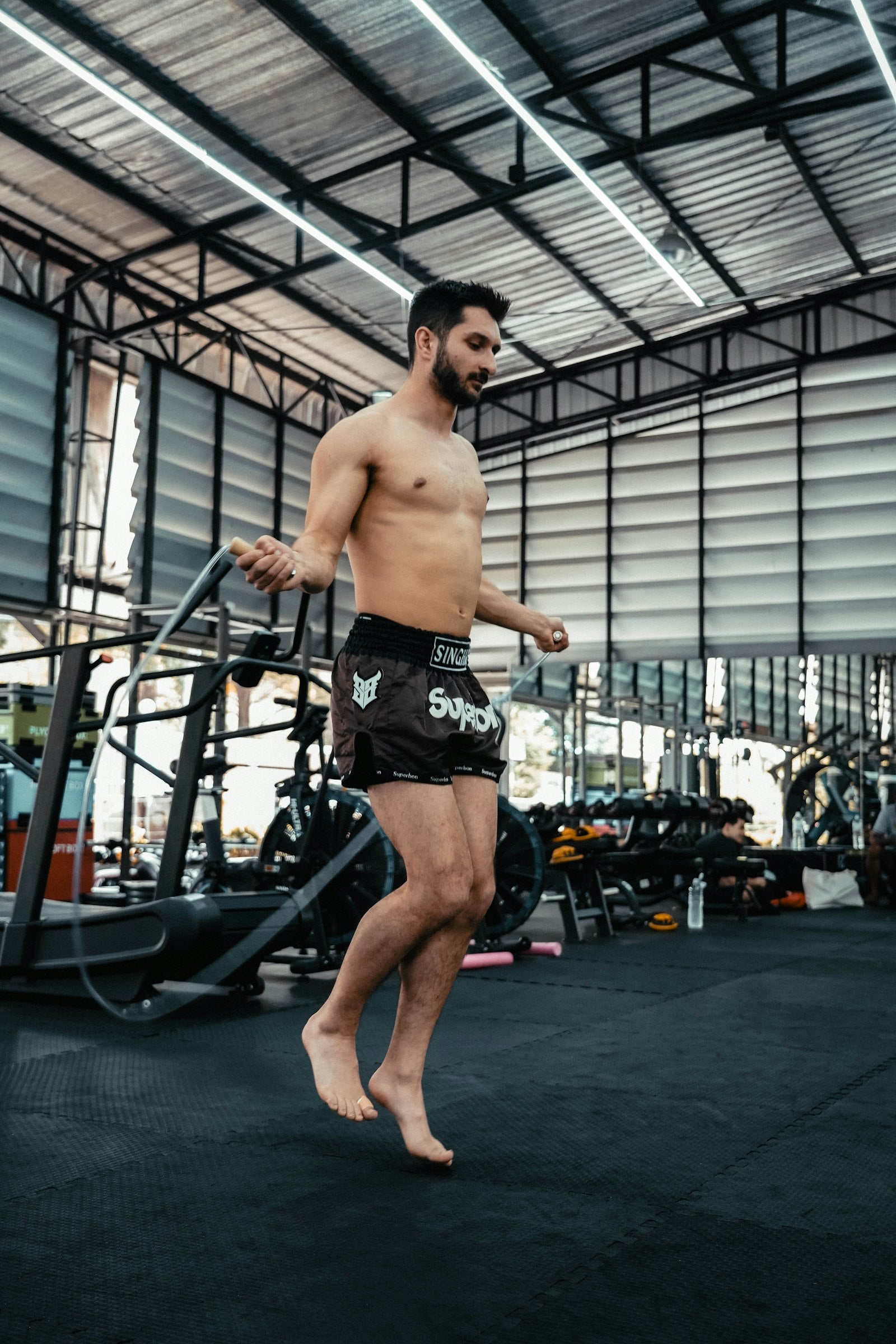
Being able to run 5k easily and being able to keep your hands up and your technique sharp in the third round of hard sparring are two different kinds of fitness, and a lot of fighters train hard at the wrong one. Muay Thai cardio isn't steady-state endurance — it's the ability to recover fast between short, explosive bursts, over and over, without your technique falling apart. Here's how to actually train for that, not just for a faster mile time.

Why Muay Thai Cardio Is Different From Regular Cardio
A fight or a hard sparring session isn't a constant effort — it's repeated bursts of high output (a combination, a clinch exchange, a flurry of kicks) separated by brief lower-intensity periods, across rounds that each last two to five minutes. That's an interval demand, not a steady-state one, which is why someone with a genuinely fast 5k time can still gas out badly in round two of hard pads. Training needs to mirror that pattern: short, hard efforts with incomplete recovery, repeated for multiple rounds, rather than one long continuous effort at a moderate pace.
The Core Conditioning Toolkit
| Method | What it builds | Typical use |
|---|---|---|
| Skipping rope | Footwork endurance, calf and ankle stamina, rhythm | Warm-up and standalone conditioning rounds |
| Roadwork / running | Aerobic base that supports faster recovery between bursts | 2-3 sessions a week, separate from technical training |
| Heavy bag rounds | Sport-specific muscular endurance, technique under fatigue | Timed rounds matching fight length |
| Interval sprints | Anaerobic capacity, repeat explosive efforts | 1-2 sessions a week, not more |
| Bodyweight circuits | Full-body muscular endurance | Conditioning days, off the bag |
None of these alone is "Muay Thai cardio" — the aerobic base from running is what lets you recover between the anaerobic bursts the bag and sparring demand. Fighters who only do one or the other tend to hit a ceiling: pure runners have great engines but no explosiveness, and pure interval trainers explode well early but can't sustain it into later rounds.

A Sample Weekly Conditioning Structure
| Day type | Focus |
|---|---|
| Technical training days | Conditioning comes from the session itself — pads, bag, sparring rounds |
| 1-2 dedicated conditioning days | Interval sprints or bag conditioning rounds, kept separate from skill work |
| 1-2 lower-intensity days | Steady roadwork or an easy skip session to build aerobic base without adding fatigue |
| At least 1 full rest day | Recovery is what lets the next week's conditioning actually improve you |
Interval Structures That Actually Match Fight Pace
The simplest, most transferable interval structure is the one that mirrors your actual round length: 3 minutes of work followed by 1 minute of rest, repeated for 3-5 rounds, is the standard amateur format and trains exactly the recovery capacity a fight demands. For shorter, sharper anaerobic work, 20-30 second maximal efforts with equal or slightly longer rest — sprint intervals or bag flurries — build the explosive repeat-effort capacity that a single long run never will. Mix both into your week rather than picking one; they train different, complementary systems.

Common Cardio Mistakes
Only doing steady-state running. A strong aerobic base matters, but running alone doesn't train the repeated-burst pattern a fight actually demands. It's a foundation, not the whole plan.
Going hard every single session. Conditioning work needs the same easy/hard structure as skill training — sprinting flat-out every session without lighter days leads to burnout and actually slows adaptation, not speeds it.
Training cardio with sloppy technique. Bag conditioning rounds thrown with broken form don't transfer to fight fitness as well as rounds thrown with your actual technique held together under fatigue — that's the entire point of sport-specific conditioning.
Skipping recovery entirely. Cardio adaptations happen during rest, not during the session itself. A week with zero easy days or rest days usually performs worse than one with proper structure.
How to Know If Your Cardio Is Actually Working
Raw run times are a weak signal for fight-specific conditioning. Better markers: how fast your breathing recovers in the minute between rounds, whether your hands are still up and your technique is still clean in round three compared to round one, and whether a hard sparring session leaves you wrecked for two days or ready to train again the next. Improving fight cardio shows up in the gym, not on a treadmill display.
Frequently Asked Questions
How many times a week should I do cardio for Muay Thai?
Most fighters benefit from 1-2 dedicated conditioning sessions a week on top of the conditioning built into technical training itself, plus 1-2 lighter aerobic sessions such as easy running or skipping, with at least one full rest day.
Is running necessary for Muay Thai fitness?
Running builds the aerobic base that supports faster recovery between the high-intensity bursts a fight demands. It's not sufficient on its own, but skipping it entirely usually leaves fighters with good explosiveness that fades quickly across rounds.
What's the best interval structure for fight cardio?
3 minutes of work followed by 1 minute of rest, repeated for 3-5 rounds, mirrors standard round length and trains fight-specific recovery. Shorter 20-30 second maximal efforts build complementary explosive repeat-effort capacity.
Why do I gas out in sparring even though I can run a fast 5k?
Steady-state running trains a different energy system than the repeated high-intensity bursts of sparring. A fast runner without interval-specific and sport-specific conditioning can still fatigue quickly under the burst-and-recover demand of live rounds.
How long does it take to improve fight cardio?
Noticeable improvement in round-to-round recovery typically shows up within 4-6 weeks of consistent, structured conditioning work, though full fight-pace conditioning develops over several months of regular training.
Keep Reading
Muay Thai Roundhouse Kick: Complete Technique Breakdown →
Best Muay Thai Gloves: The Complete Buying Guide →


