
Cart
0
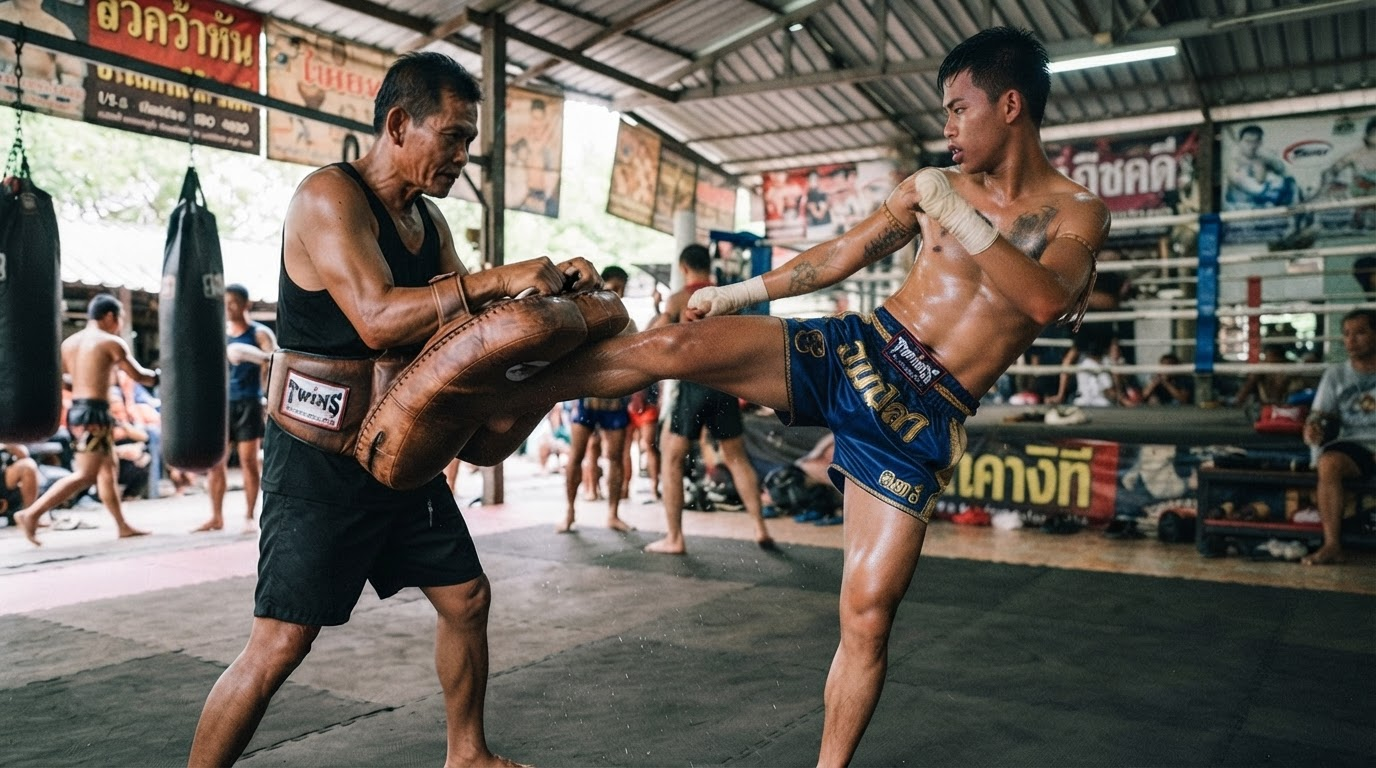
Muay Thai is called "the art of eight limbs" for a specific reason: fists, elbows, knees, and shins — two of each — are all legal striking weapons, more points of contact than boxing, kickboxing, or most other striking sports allow. Here's what each weapon is actually for, not just a list of names.

The Eight Weapons at a Glance
| Weapon | Range | Primary role |
|---|---|---|
| Fists (2) | Close to medium | Setups, combinations, quick scoring at closer range |
| Elbows (2) | Very close / clinch | High-damage strikes at range too tight for punches or kicks |
| Knees (2) | Close / clinch | Body and head damage, especially dominant in the clinch |
| Shins (2) | Medium to long | The primary kicking weapon — not the foot |
Fists: The Setup Weapon
Punches in Muay Thai serve a different role than they do in boxing — less the primary scoring tool, more the setup that opens a path for a kick, knee, or elbow. A jab that gets an opponent reacting or moving creates the half-second gap a heavier weapon needs. That doesn't mean punches don't score on their own, but fighters who over-rely on hands the way a boxer would tend to leave the other six weapons underused.

Elbows: The Close-Range Damage Weapon
Elbows are legal in Muay Thai in a way they aren't in most other striking sports, and they're most dangerous at the range where punches and kicks lose their power — right in the pocket or inside the clinch. A horizontal elbow, a downward elbow off a clinch break, or a spinning elbow off an opponent's miss can end an exchange outright, which is exactly why elbows are used more sparingly and with more setup than punches: the risk of eating a counter elbow at that range cuts both ways.
Knees: The Clinch's Primary Weapon
Once two fighters are locked in the clinch, knees become the dominant weapon, since punches and kicks both lose most of their power at that range. A straight knee to the body, a diagonal knee around the guard, or a flying knee off a clinch break are all standard tools, and clinch control — whose hands are on whose neck, who has the better angle — largely determines who lands the cleaner knees. This is also why clinch defence is its own skill separate from striking defence.

Shins: The Real Kicking Weapon
The defining detail beginners usually miss: Muay Thai kicks are meant to land with the shin, not the foot. The shin bone can take and deliver far more repeated impact than the small bones of the foot, which is why fighters condition their shins specifically and why a technically correct roundhouse kick strikes with the shin roughly two to four inches above the ankle rather than the instep. Shin-based kicks to the leg, body, and head make up the highest-volume striking weapon in the sport by a wide margin.

Frequently Asked Questions
Why is Muay Thai called "the art of eight limbs"?
The name reflects the eight points of contact used to strike: two fists, two elbows, two knees, and two shins, more legal striking weapons than most other combat sports allow.
Should Muay Thai kicks land with the foot or the shin?
The shin, roughly two to four inches above the ankle. The shin bone handles repeated impact far better than the smaller bones of the foot, which is why fighters condition their shins specifically for kicking.
Why are elbows used less often than punches or kicks?
Elbows are highly effective at very close range but also carry real counter-risk at that same range, so fighters typically set them up carefully rather than throwing them as a first option.
Why are knees so important in the clinch?
Punches and kicks both lose most of their power at clinch range, leaving knees as the dominant striking weapon once two fighters are locked up. Clinch control largely determines who lands the cleaner knees.
Do all eight limbs get used equally in a fight?
No. Kicks are typically the highest-volume weapon, punches serve mostly as setups, and elbows and knees are used more selectively at closer range, particularly in and around the clinch.
Keep Reading
Muay Thai Roundhouse Kick: Complete Technique Breakdown →
The History of Muay Thai: From Battlefield to Stadium →


